
Leadership today is no longer about authority, hierarchy, or control. It is about influence, clarity, and the ability to bring out the best in people—consistently.
In a world that is evolving faster than ever, effective leadership has become both an art and a discipline. The leaders who stand out are not just those who achieve results, but those who elevate others while doing so.
Let’s explore what truly defines effective leadership in today’s landscape.
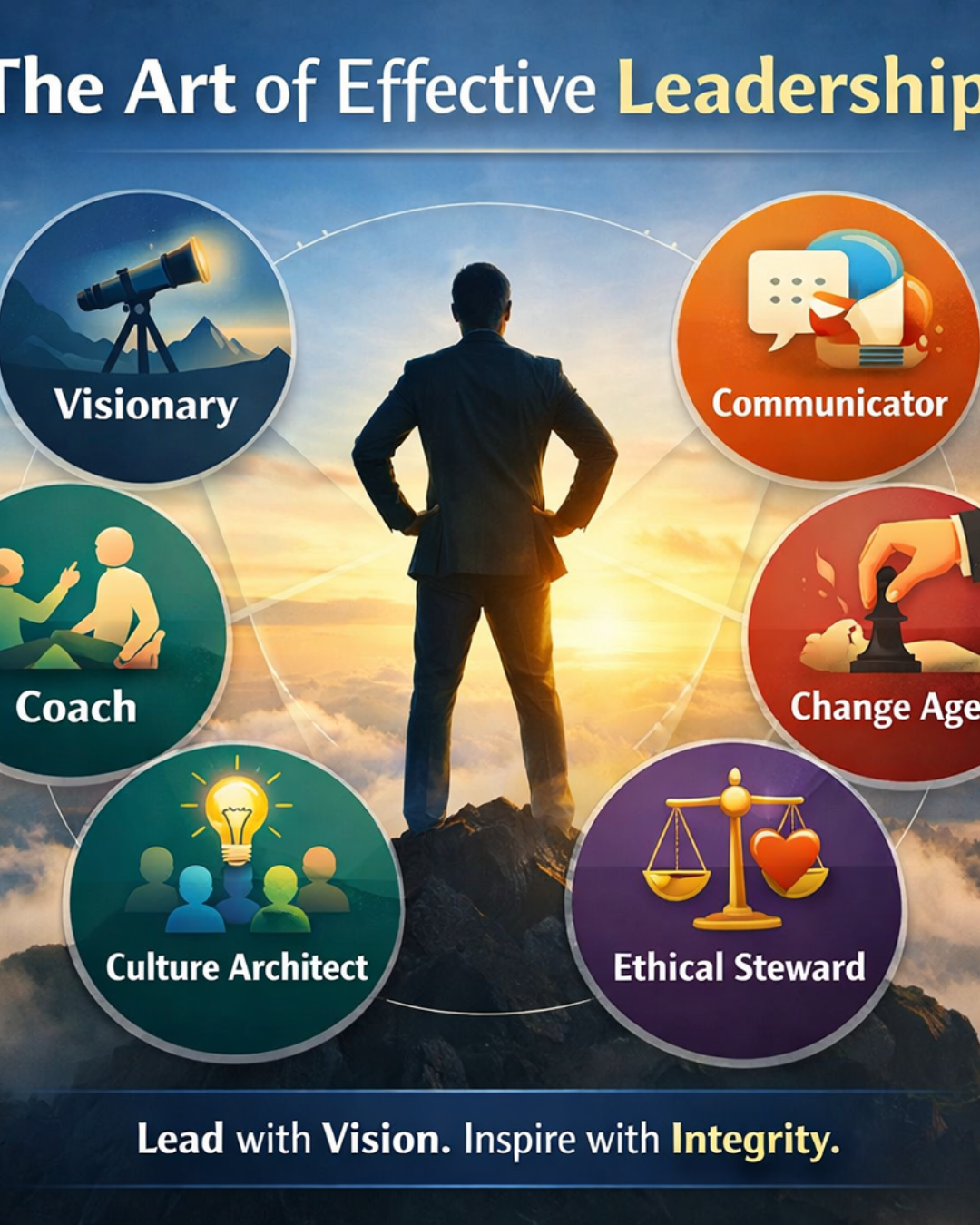
The Leader as Visionary
Great leaders see what others don’t—yet.
They don’t just react to the present; they shape the future. A visionary leader creates a compelling picture of what lies ahead and inspires people to believe in it.
But vision alone is not enough. The real power lies in making that vision clear, relatable, and actionable for the team.
When people see where they’re going, their energy changes. Their commitment deepens.
The Leader as Communicator
Leadership lives and dies in communication.
It’s not just about speaking—it’s about connecting.
Effective leaders communicate with:
- Clarity (so there’s no confusion)
- Consistency (so trust is built)
- Empathy (so people feel understood)
They don’t overload teams with information; they deliver meaning.
A single well-communicated message can align an entire organization. A poorly communicated one can create chaos.
The Leader as Coach
The best leaders don’t create followers—they create more leaders.
They invest time in understanding their people, identifying strengths, and nurturing potential. Instead of giving all the answers, they ask the right questions.
Coaching leaders:
- Encourage ownership
- Build confidence
- Develop independent thinking
When leaders coach, teams don’t just perform—they grow.
The Leader as Culture Architect
Culture is not built by HR policies. It is built by leadership behavior.
What leaders tolerate, reward, and demonstrate becomes the culture.
A leader who values accountability creates ownership.
A leader who models respect builds trust.
A leader who embraces learning creates innovation.
Culture is the silent force that drives performance when the leader is not in the room.
The Leader as Change Agent
Change is no longer occasional—it is constant.
Effective leaders don’t resist change; they lead it.
They help people navigate uncertainty by:
- Creating clarity in ambiguity
- Building resilience
- Turning resistance into readiness
Change-led organizations don’t just survive—they stay ahead.
The Leader as Ethical Steward
In the pursuit of results, integrity must never be compromised.
True leadership is measured not just by what is achieved, but how it is achieved.
Ethical leaders:
- Build long-term trust
- Create psychological safety
- Inspire loyalty and respect
In a world of short-term gains, ethical leadership is a long-term advantage.
Practical Steps to Elevate Your Leadership Today
Leadership transformation doesn’t require a title—it requires intention.
Here are a few simple yet powerful steps you can start today:
- Pause and reflect: Are your actions aligned with your leadership values?
- Listen deeply: Your team often has the answers—are you hearing them?
- Communicate with purpose: Say less, but make it meaningful.
- Develop one person intentionally: Start building your leadership legacy today.
- Model what you expect: Your behavior is your strongest message.
Small shifts in leadership create massive shifts in results.
Conclusion
Leadership is not a destination—it is a continuous journey of growth, awareness, and impact.
The question is not whether you are leading…
The question is how effectively you are leading.
👉 Which of these leadership roles do you believe is your strongest today?
👉 And which one do you feel you need to develop further?
I’d love to hear your thoughts—share your perspective in the comments.