
The Hidden System Behind Consistent Success
Every year, millions of people promise themselves change.
“I will wake up early.”
“I will exercise regularly.”
“I will stop procrastinating.”
“I will stay calm under pressure.”
For a few days, willpower works.
Then life happens. Deadlines pile up. Stress increases. Energy drops.
And suddenly the strong determination we had on Day 1 quietly fades away.
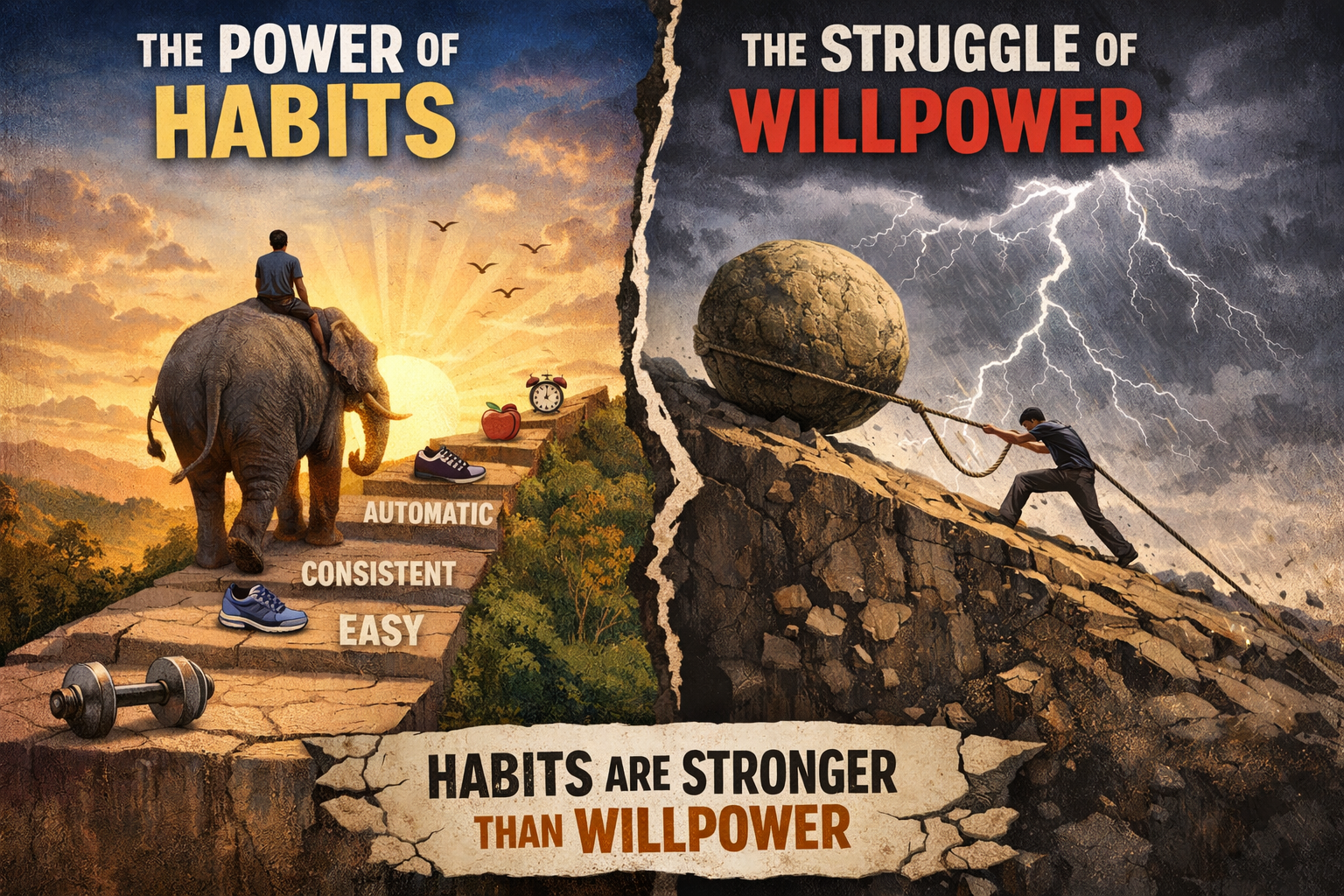
This is where a powerful truth emerges: Willpower starts change. Habits sustain it.
The Problem With Willpower
Willpower is like a **battery. It is powerful but limited.
Throughout the day, every decision drains a little bit of that battery:
- Resisting distractions
- Handling stress
- Making difficult decisions
- Managing emotions
- Staying disciplined
By evening, most people are mentally exhausted. This is why many good intentions collapse at the end of the day. Not because people are weak. But because **willpower alone is an unreliable strategy.**
Habits: The Brain’s Automation System
Habits are different. A habit is a behavior your brain has automated Once something becomes a habit, it no longer requires heavy mental effort. Your brain shifts it to a more efficient system. Think about it:
You don’t need motivation to:
- Brush your teeth
- Check your phone
- Lock the door
- Drive a familiar route
Your brain simply runs the program.
This is why habits are so powerful. They remove the need for constant willpower.
Successful People Don’t Rely on Motivation alone.
High performers understand something most people miss.
They do not depend on daily motivation.
Instead, they design powerful habits
A few examples:
- Writers who write at the same time every day
- Athletes who train whether they feel like it or not
- Leaders who schedule thinking time
- Entrepreneurs who build disciplined routines
Their success is not driven by bursts of inspiration.
It is driven by structured habits.
How Habits Are Formed
Every habit follows a simple loop:
**Cue → Routine → Reward**
Example:
Cue: You feel stressed
Routine: You check social media
Reward: Temporary relief
This loop repeats until the brain locks it into a pattern.
The good news is the same system can build empowering habits.
Cue: Morning alarm
Routine: 10-minute exercise
Reward: Energy and mental clarity
Repeat the loop long enough and the behavior becomes automatic.
Small Habits Create Massive Change
People often try to change their lives through big dramatic decisions
But real transformation comes from small daily actions repeated consistently
Reading 10 pages a day becomes 15 books a year.
Walking 20 minutes daily transforms long-term health.
Writing a few paragraphs daily can create a book.
Success is rarely explosive. It is compounded discipline.
Design Habits, Don’t Fight Yourself
The biggest mistake people make is trying to **fight their own psychology**
A smarter approach is to design habits that work with the brain
Some practical ways:
- Make good habits **easy to start**
- Attach new habits to existing routines
- Reduce friction for positive behaviors
- Remove triggers for negative ones
- Focus on consistency, not perfection
When the system is designed well, progress becomes almost inevitable.
The Real Secret of Long-Term Success IS Willpower can win a day whereas habits win a lifetime**.
If you want lasting change in your career, health, leadership, or relationships, focus less on forcing yourself and more on building systems that guide your behavior automatically.
Because ultimately:
You don’t rise to the level of your motivation.
You fall to the level of your habits.